

Is Freeze Dried Candy Healthy? The Honest Answer for Parents
October 29, 2026 • Comet Candies
Is freeze-dried candy healthy? Not in a nutritional sense: it is still candy. Freeze-drying removes most of the water and changes the texture, but it does not remove the sugar or turn candy into a nutritious snack. For the same amount of the original candy, the sugar and calories are essentially unchanged; because water is gone, those amounts are more concentrated by weight. Like regular candy, it can fit as an occasional treat, but it is best enjoyed in a sensible portion.
What freeze-drying actually does
Freeze-drying freezes food, then uses a vacuum to remove ice as water vapor. Depending on the candy and process, it removes most of its moisture, often around 98–99% of the water. That dramatic change is why familiar candies can become larger-looking, airy, crisp, or crumbly.
What it doesn’t do is take out the sugar or other ingredients that were already in the candy. The process changes texture and moisture, not the candy’s basic nutritional nature. Our guide to what freeze-dried candy is explains the process in more detail.
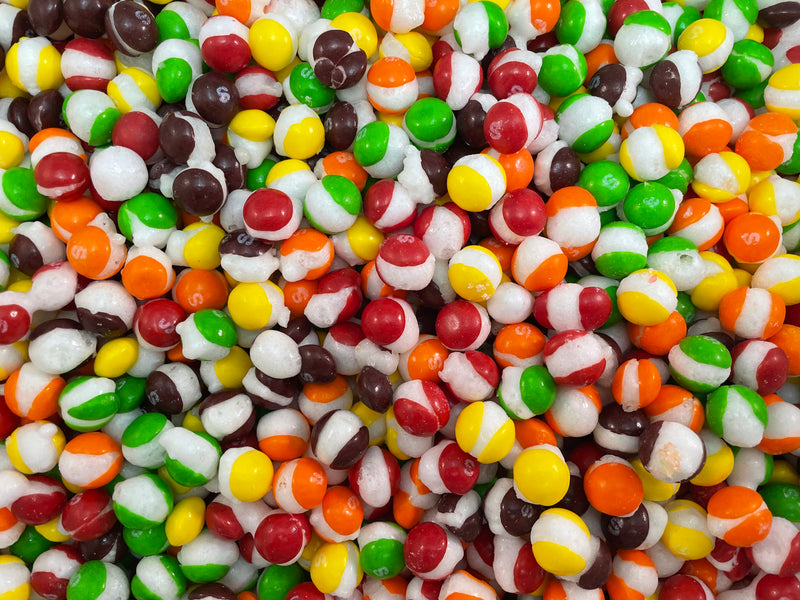
Freeze-dried candy nutrition: what changes and what doesn’t?
For an equal amount of the original candy, removing water doesn’t remove its sugar or calories. But nutrition labels describe a particular serving size, and serving sizes can differ between products. Check the package rather than assuming a bag, a handful, or a certain number of pieces is one serving.
The other important comparison is by weight. When water is removed, the remaining candy ingredients make up a larger share of each gram. That means sugar and calories are more concentrated by weight, even though the freeze-drying process hasn’t added sugar.
So, when looking at freeze-dried candy calories or sugar, compare the serving size and Nutrition Facts label. Don’t rely on how large or light a piece looks: an airy texture can make the candy seem like more than it is.
Does freeze-drying remove nutrients?
Freeze-drying can be useful for preserving some nutrients in fruit. Because the process avoids prolonged high-heat drying, research has found it can retain heat-sensitive nutrients such as vitamin C better than some hot-air drying methods. For example, a PubMed study on Kakadu plum compared freeze-drying and oven-drying and reported better vitamin C retention in freeze-dried samples.
That finding is about fruit, not candy. Fruit starts with naturally occurring nutrients and may provide fiber, vitamins, and minerals. Freeze-drying doesn’t make fruit identical to fresh fruit, and concentrated dried fruit still needs sensible portions. Harvard Health explains that freeze-dried fruit tends to maintain nutrients better than heat-dried fruit, while noting that removing water concentrates it by weight (Harvard Health).
Candy starts from a different place. If the original candy wasn’t a meaningful source of nutrients, changing its texture won’t make it one. In short: freeze-drying may help retain some nutrients in fruit, but it doesn’t transform candy into fruit or a nutrient-rich snack.
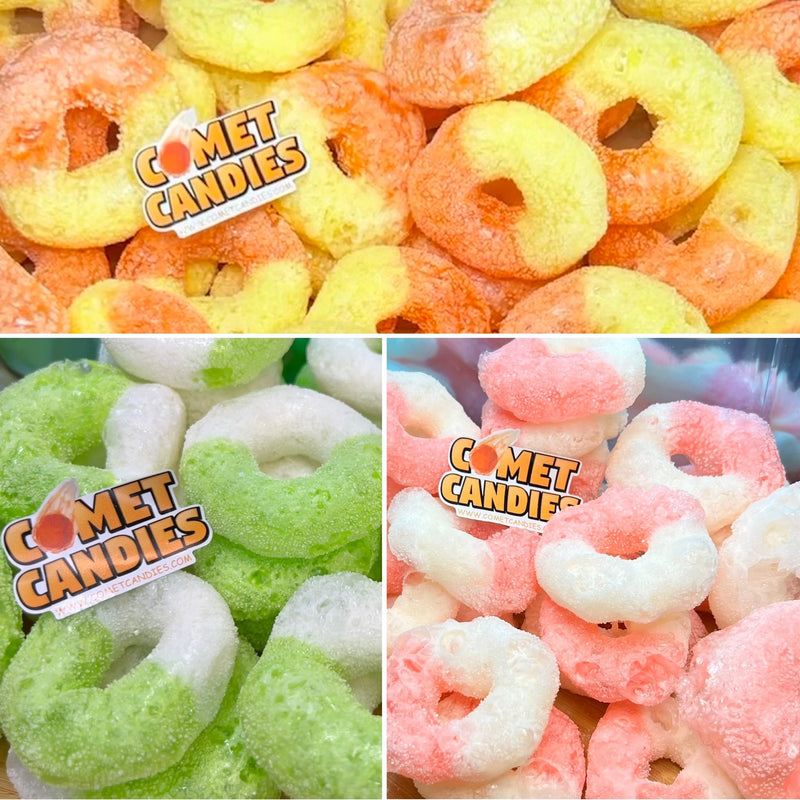
One small clarification for shoppers: Comet Candies’ Fruit Ring Sampler contains freeze-dried gummy candy in peach, watermelon, and green apple flavors. Despite the name, it isn’t a serving of dried fruit.
So, is freeze-dried candy bad for you?
Not automatically. Freeze-dried candy isn’t made worse for you just because it has been freeze-dried, but it isn’t healthier for that reason either. It remains a sweet treat, and portion size and the rest of a child’s diet matter more than the puffed shape.
Parents may find the texture more convenient in some situations. Certain freeze-dried candies are less chewy and sticky to handle than their original versions, which can mean less sticky residue on fingers or surfaces. Comet Candies packs its candy in resealable bags, which can make it easier to close between snack times. Those are practical features, not health benefits, and resealable packaging doesn’t determine how much a child eats.
A straightforward approach is to pour a small portion into a bowl instead of handing over the whole bag, and to serve candy as a treat rather than a replacement for meals or fruit. For everyday snacks, choose foods that offer nutrients the candy doesn’t, such as fresh fruit or plain, unsweetened freeze-dried fruit. Nutrition experts commonly advise moderation with sweets; Tasting Table’s review likewise notes that freeze-drying doesn’t make candy nutritionally superior to its regular form.
A parent’s quick guide to choosing a treat
- Read the label. Check serving size, calories, total sugar, and added sugar. Products and serving sizes vary.
- Offer a portion, not an open-ended bag. A bowl makes it easier to see how much is being served.
- Keep expectations clear. Freeze-dried candy is candy, even when it looks puffed, airy, or different from the original.
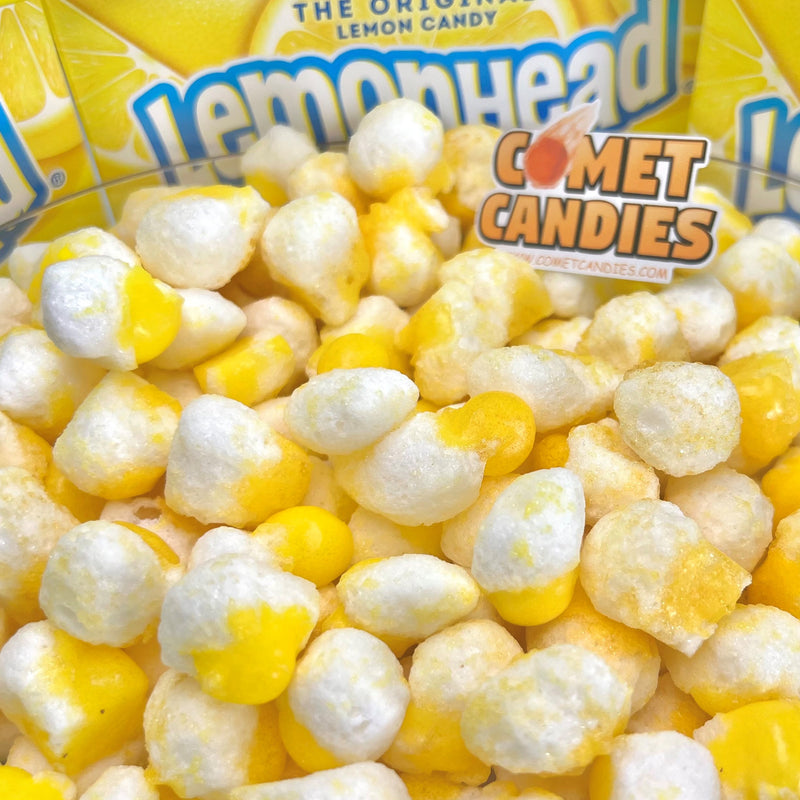
- Choose based on taste and texture. If your family enjoys a crunchy twist, try Rainbow Skrillerz, Lemon Puffs, or Jolly Comets. These are made with the named original candies and are not affiliated with their original brands.
Comet Candies makes small-batch freeze-dried candy in Franklin, Tennessee. The resealable bags help keep treats closed between servings; they don’t change what’s inside.
Parents’ FAQ
Does freeze-drying remove sugar from candy?
No. It removes water, not sugar. The sugar can be more concentrated by weight because there is less water in the finished candy.
Does freeze-dried candy have fewer calories?
Not for the same amount of the original candy. Removing water doesn’t remove its calories. Check the Nutrition Facts label for the calorie amount in the stated serving, since serving sizes vary.
Is freeze-dried fruit healthier than freeze-dried candy?
They’re different foods. Freeze-dried fruit can retain nutrients such as fiber and vitamins from the original fruit, although removing water concentrates it by weight. Freeze-dried candy remains candy; its texture changes, but it doesn’t gain fruit’s nutritional qualities.
Can my child have freeze-dried candy?
Families can decide what fits their routines. Treat it like other candy: check the label, serve a reasonable portion, and don’t present it as a nutritious replacement for everyday foods. For concerns specific to your child, ask a qualified health professional.
The honest bottom line: freeze-dried candy can be a fun, crunchy treat, but it isn’t a health transformation. If your family would like to try it, explore the Comet Candies collection. Comet Candies offers free U.S. shipping on orders over $50.